
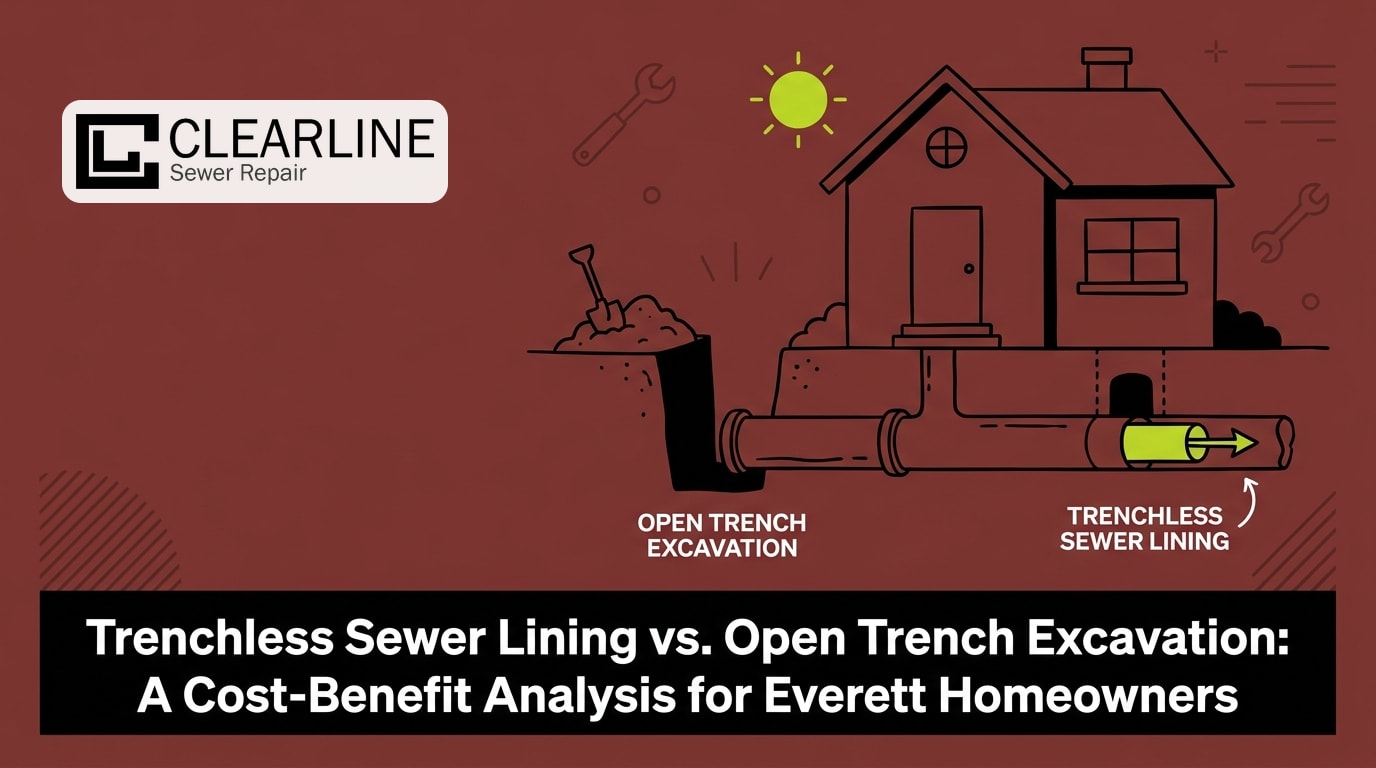
Evaluating Your Options When an Everett Sewer Line Fails Before Winter
Are you facing a failing sewer line under your driveway or pristine landscaping just as the cold, wet season approaches? When a vital underground pipe collapses or clogs beyond clearing, making the right choice quickly becomes a priority. If you are conducting a Trenchless Sewer Lining vs. Open Trench Excavation: A Cost-Benefit Analysis for Everett Homeowners, you already know that evaluating the true impact goes far beyond looking at a basic repair estimate.
Here is the thing: the base quote for traditional digging rarely accounts for the total property disruption you will experience. The decision between tearing up your yard and utilizing modern underground technology requires a careful look at the hidden restoration requirements that follow the repair itself. Understanding the advantages of trenchless repairs and specifically how UV-cured trenchless pipelining works will help you make a confident, financially sound decision. This objective guide breaks down the physical, logistical, and seasonal realities of both methods for homeowners in Everett, WA, ensuring you know exactly what to expect before any work begins.
The Heavy Footprint of Traditional Open-Trench Excavation
Traditional sewer replacement is exactly what it sounds like: digging a massive trench to physically remove and replace the damaged pipe. While this method has been used for decades, its immediate physical impact on a residential property is severe. The mechanics of open-trench excavation involve heavy machinery, significant soil displacement, and the unavoidable destruction of any surface features sitting above the sewer line.
The standard excavation process follows these highly disruptive steps:
- Heavy Machinery Staging: Backhoes, mini-excavators, and dump trucks must be parked on or near your property. This equipment is heavy enough to crack adjacent concrete and compress healthy lawn soil just by driving over it.
- Hardscape Demolition: If your sewer line runs under a concrete driveway, walkway, or retaining wall, those structures must be jackhammered and hauled away. There is no way to dig a trench through solid concrete without destroying it completely.
- Deep Soil Excavation: Depending on the depth of your pipe, cubic tons of dirt are scooped out and piled on your remaining lawn. This displaced soil suffocates grass and damages the root systems of nearby trees.
- Trench Shoring and Pipe Work: Deep trenches require structural shoring to prevent collapse while technicians work at the bottom to remove the old pipe and lay the new one.
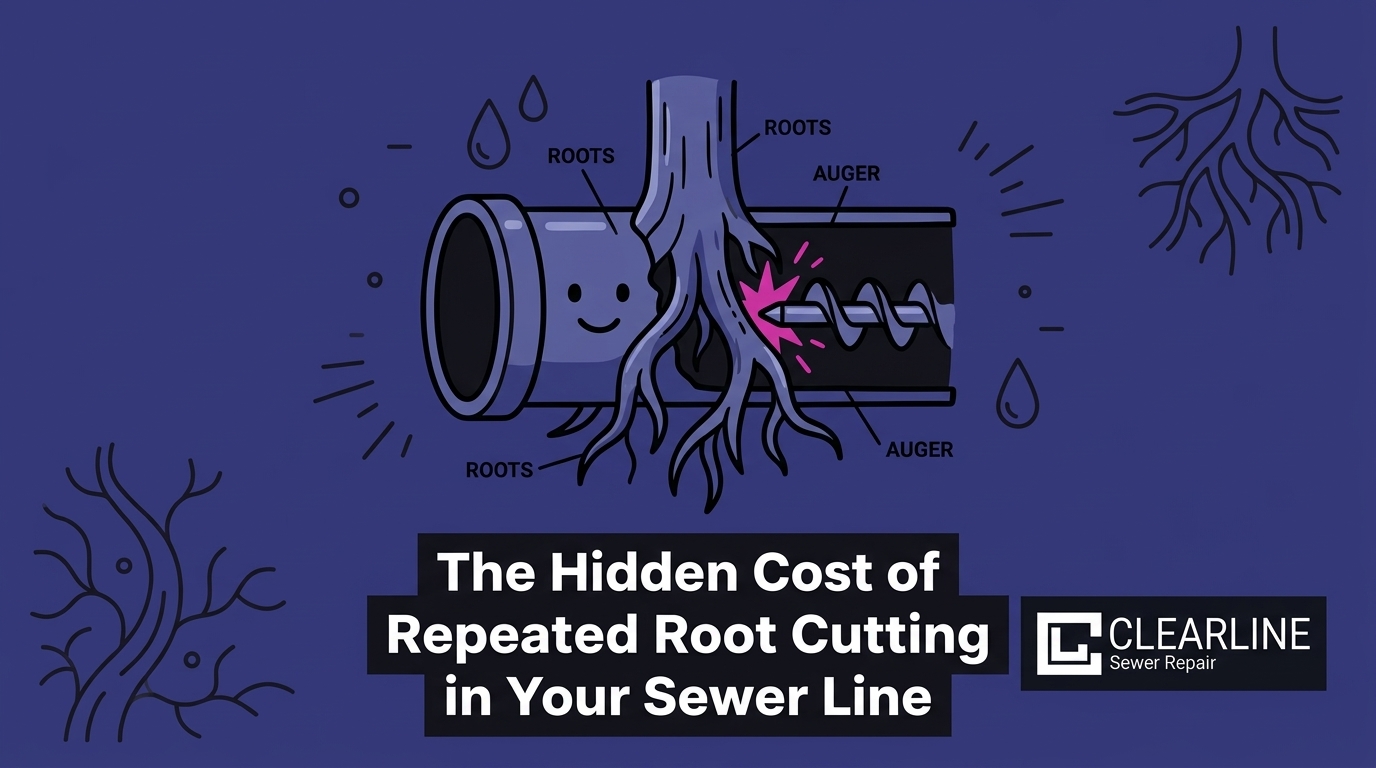
Having deep trenches and heavy equipment on your property for days—or even weeks—creates major logistical challenges. You lose access to your driveway, parts of your yard become hazardous zones, and the noise and mess are constant. Furthermore, if you are already dealing with the hidden costs of repeated root cutting, you might feel pressured to accept this massive disruption just to stop the backups. However, especially with November pre-winter weather looming, leaving a massive open trench in your yard exposes your property to serious environmental risks.
How Modern Trenchless Technology Bypasses the Digging
Fortunately, you no longer have to destroy your driveway to fix the pipe underneath it. Modern trenchless technology offers a highly effective alternative that restores the structural integrity of your sewer line without the massive surface destruction. Instead of digging a trench, technicians use existing access points to build a brand-new pipe directly inside the old one.
The mechanics of trenchless sewer lining:
- Cleanout Access: Technicians access the sewer line through an existing cleanout port. If one does not exist, they only need to dig a single, small access hole rather than a property-length trench.
- Thorough Cleaning: The old pipe is hydro-jetted and mechanically descaled to remove roots, grease, and debris, returning it to its original internal diameter.
- Liner Insertion: A flexible, resin-saturated liner is pulled or inverted into the damaged pipe. Because it is flexible, it can navigate sweeps and bends in the system.
- Curing in Place: Once in position, the liner is expanded to press tightly against the walls of the old pipe. It is then cured until it hardens into a solid, seamless, structural pipe.
When you opt for no-dig pipe repair, the specific curing method matters. UV-cured trenchless lining represents the forefront of this technology. Unlike traditional ambient-cure methods that rely on heat or steam and can take many hours to harden, UV-cured liners harden rapidly when exposed to a specialized ultraviolet light train pulled through the pipe. This specific advantage means the process is remarkably fast, exceptionally clean, and leaves an incredibly small footprint on your property. Once cured, the new pipe is highly durable. The National Association of Sewer Service Companies (NASSCO) notes that cured-in-place pipe (CIPP) liners can boast a structural lifespan of 50 years or more, easily matching or exceeding the lifespan of traditional replacement pipes.
The Hidden Restoration Impacts of Traditional Digging
When homeowners compare estimates, they often look solely at the base cost of the plumbing work. However, the true financial and logistical burden of traditional excavation lies in the hidden restoration impacts. When evaluating the average cost of trenchless sewer repair against digging, you must factor in the extensive, non-obvious requirements of putting your property back together.
Driveway and Hardscape Replacement:
The base cost of an excavation project rarely accounts for the full replacement of a torn-up concrete driveway. Plumbers are not concrete contractors. Once the pipe is buried, you are typically left with a dirt patch or a rough gravel fill. You must then hire a separate contractor to pour new concrete, which adds thousands of dollars to the total project cost.
Soil Settling and Compaction:
You cannot simply dump dirt back into a trench and immediately pour concrete over it. Displaced soil must be compacted in small layers (called “lifts”) to prevent future sinking. Even with mechanical compaction, the soil often needs time to settle naturally. If you pour a new driveway over poorly compacted dirt, the ground will eventually sink, cracking your brand-new concrete and starting the cycle of destruction all over again.
Landscaping and Custom Features:
Secondary costs quickly accumulate when heavy machinery destroys mature landscaping, custom retaining walls, or established hardscapes. Replacing a 20-year-old tree or rebuilding a custom stone wall is incredibly expensive and time-consuming. In Everett, WA, where homeowners take pride in their outdoor spaces, restoring a yard to its pre-dig condition can take months of growth and significant landscaping investments. Evaluating this total property impact is the only way to accurately compare your repair options.
Why November Rains Complicate Open Trench Projects
Regional climate plays a massive role in the success and timeline of a sewer repair project. In the Pacific Northwest, seasonal weather dramatically exacerbates the negative impacts of traditional excavation. If your sewer line fails during November pre-winter weather, attempting an open-trench repair introduces severe environmental complications.
The hazards of wet-weather excavation:
- Soil Saturation and Mud Tracking: The significant increase in precipitation during late fall and winter heavily saturates the soil. When excavators dig into waterlogged dirt, it turns into deep, unmanageable mud. This mud tracks across your remaining lawn, down your street, and onto your sidewalks, creating a massive mess that is difficult to contain.
- Trench Collapse Risks: Wet soil is heavy and unstable. The risk of trench cave-ins increases exponentially during rainy weather. This not only creates safety hazards for the workers but often requires the trench to be dug even wider to stabilize the walls, destroying more of your property in the process.
- Restoration Delays: Cold, wet weather makes outdoor concrete pouring and soil stabilization highly unpredictable. Concrete requires specific temperature and moisture conditions to cure correctly. Pouring a new driveway in the middle of a November rainstorm can lead to surface spalling and weakened concrete. Because of this, open-trench restoration is frequently delayed until the weather clears, leaving you with a muddy, unusable driveway for weeks.
In stark contrast, trenchless methods are largely insulated from weather delays. Because the work happens entirely underground via small access points, a UV-cured trenchless lining project can proceed smoothly regardless of the rain falling above ground. You avoid the mud, the collapse risks, and the frustrating weather delays entirely.
Evaluating Total Property Disruption: A Side-by-Side Look
To make a confident decision, it helps to synthesize the realities of both methods into a clear, direct comparison. When you look at project timelines, surface destruction, weather vulnerability, and post-repair restoration, the differences become stark.
Open Trench Excavation Realities
- Surface Destruction: Requires the complete removal of any driveways, walkways, or landscaping located above the pipe.
- Heavy Machinery: Mandates the use of backhoes and dump trucks, which displace cubic tons of soil and damage surrounding lawns.
- Weather Vulnerability: Highly susceptible to seasonal rain delays, mud tracking, and trench collapse during wet weather.
- Restoration Needs: Leaves the homeowner responsible for hiring secondary contractors for extensive post-project hardscape and landscape restoration.
Trenchless Lining Advantages
- Surface Preservation: Preserves concrete driveways, mature landscaping, and custom hardscaping entirely.
- Minimal Footprint: Completed rapidly with minimal surface disruption, usually requiring only a single small access point or existing cleanout.
- Weather Resistance: Performed underground, making it immune to rain delays and messy mud tracking.
- Long-Term Reliability: UV-cured trenchless lining provides a 50-year structural solution without the dig, allowing for an immediate return to normal property use.
| Comparison Factor | Open Trench Excavation | UV-Cured Trenchless Lining |
|---|---|---|
| Project Timeline | Days or weeks, heavily dependent on weather. | Typically completed in a single day. |
| Surface Destruction | Extensive. Destroys driveways and lawns. | Minimal. Uses cleanouts or small access holes. |
| Weather Impact | High risk of mud, collapse, and delays. | Zero weather delays; work is underground. |
| Post-Repair Restoration | Requires new concrete and soil compaction. | None. Immediate return to normal use. |

Frequently Asked Questions About Sewer Line Replacement
Is trenchless sewer repair better than excavation?
For most residential scenarios, trenchless sewer repair is the superior choice because it preserves your property. While excavation requires tearing up your yard, driveway, and landscaping to reach the pipe, trenchless methods restore the pipe from the inside out. This avoids the massive secondary costs of replacing concrete and replanting mature trees. As long as the original pipe has not completely collapsed in on itself, trenchless technology provides a highly durable fix with a fraction of the disruption.
What is the true impact of trenchless sewer repair on my property?
The true impact of trenchless sewer repair on your property is remarkably minimal. Because technicians use an existing cleanout port or dig a single, small access hole, the bulk of your yard remains completely untouched. You will not have heavy backhoes parked on your lawn or piles of displaced dirt smothering your grass. Once the underground work is finished, you can immediately return to using your driveway and enjoying your yard as if nothing ever happened.
How does UV-cured pipe lining work?
UV-cured pipe lining works by pulling a flexible, resin-saturated tube into the damaged sewer line and hardening it with specialized light. Once the liner is inflated to press tightly against the old pipe walls, a train of ultraviolet lights is pulled through the center. The UV light triggers a rapid chemical reaction in the resin, curing it into a solid, structurally sound pipe almost instantly. This method is significantly faster and cleaner than traditional ambient-cure liners that rely on heat or steam.
How long does trenchless sewer lining last?
Trenchless sewer lining provides a highly durable, long-term solution that rivals brand-new pipe installations. According to the National Association of Sewer Service Companies (NASSCO), cured-in-place pipe (CIPP) liners can achieve a structural lifespan of 50 years or more when installed correctly. The hardened resin creates a seamless, joint-free interior that resists tree root intrusion, corrosion, and standard wear and tear for decades.
Does November weather delay trenchless sewer lining in Everett?
No, November weather does not typically delay trenchless sewer lining projects in Everett, WA. Because the actual repair work takes place entirely underground, it is inherently insulated from surface weather conditions. While open-trench excavations turn into muddy hazards and face severe delays during heavy rainstorms, trenchless technicians can clean the pipe, insert the liner, and cure it regardless of the precipitation falling above ground.
Can trenchless lining fix a broken pipe located under my concrete driveway?
Yes, fixing pipes located under concrete driveways is one of the primary advantages of trenchless lining. Instead of jackhammering the concrete to reach the broken pipe, technicians navigate the flexible liner under the driveway via the sewer cleanout. The liner is expanded and cured directly beneath the concrete, creating a brand-new structural pipe without ever cracking the surface of your driveway.
Make a Confident Choice for Your Property’s Sewer Needs
When you evaluate the total property impact, the choice becomes clear. Avoiding the hidden costs of driveway replacement, soil compaction, and landscape restoration makes trenchless technology the smarter, more efficient option. You do not have to accept the heavy footprint and weather vulnerabilities of traditional digging.
If you are dealing with a compromised pipe in Everett, WA, you can resolve your failing sewer line without enduring a winter excavation nightmare. Reaching out to a local expert to evaluate your specific property and pipe condition is the best way to determine if your system qualifies for modern lining. Protect your hardscaping, avoid the mud, and secure a 50-year structural solution by choosing the right technology for your home.